Physical Address
304 North Cardinal St.
Dorchester Center, MA 02124
Physical Address
304 North Cardinal St.
Dorchester Center, MA 02124
MeIt has long been a rite of passage for many young people but, in recent years, passing the real driving test has become easier. Now, many people who want to take the test have to get up early to get a day before the bots and, even then, they are looking at a long and difficult wait.
Although they leave the government to deal with the problemA research report released this week has found that plans to reduce the waiting time for driving tests to seven weeks at the end of the year will not be implemented until November 2027.
One of the biggest obstacles is the withdrawal of driving test drivers. Only 83 driving test examiners have been hired despite 19 recruitments from 2021, and the average waiting time for a practical test is 22 weeks in Great Britain, according to the National Audit Office.
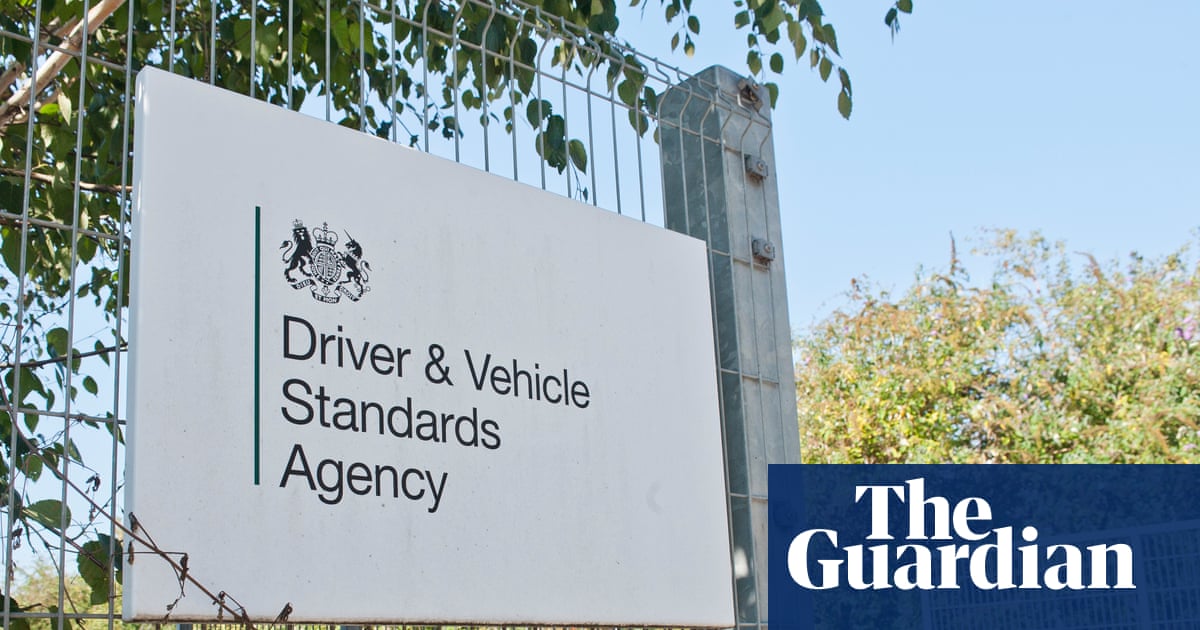
So, why is it so difficult to recruit driving examiners for the Driver and Vehicle Standards Agency (DVSA), and instructors – who used to go to testing centers for regular work – are tested on what they have to offer?
In his previous career, carrying a bright hi-vis and a car with a Battenberg logo, Woodman was often thought of as a police officer. He said: “I used to work as a traffic inspector for Highways England.
When a friend suggested she become a DVSA examiner, Woodman took the advice and joined the practice.
He said he wants to bring a “good attitude” to his new job. “I really enjoyed the job. I remember it took me two times to pass my driving test. I remember my first one with a very sad driving test and I thought: ‘This is pure torture’. Then my second driving test was amazing. He came out with a smile on his face and I said: ‘That’s how I want to be,'” said Woodman.
But the project came with problems. He said: “Most of the time you stop the car because you are driving and then take another test five minutes later.
On the other hand, Woodman said it was “nice to touch people’s lives every day” by telling them he passed. “Some people shed tears and some try to hug you.”
Although he enjoyed the job, Woodman left the DVSA in June 2023. “I got ahead because of the money. I was raising a family and I was jealous of the few friends who were doing mixed jobs,” he said.
As civil servants, DVSA driving examiners are paid at the standard rate of pay for the public sector. They are elected officers, earning more than £30,000.
“Tuition costs have gone up a bit post-Covid and teachers are making more money than before,” Woodman said. He thinks it has “shrinked” the DVSA’s pool of people.
When Sykes left being a freelance driving instructor to become a DVSA assessor in 2016, he was delighted. He said: “At the time, I was taking home the same amount of money without putting in nearly as many hours.
But, post-Covid, things changed. He was speaking to DVSA officials about the challenges they were facing with the service, including, he said, the recently departed chief executive, Loveday Rider.
He said he had met with him several times and told him about poor testers and a “dodgy” booking system that allowed bots and well-known teachers to buy exams and sell them at inflated prices. “It’s not good for a student,” he said.
Sykes moved on to become a driving instructor but still has fond memories of being a tester. “I had a woman named Jean, who was 82 years old. She had been here five times and she wanted to pass.
“She started learning to drive when she was about 20 years old and met her husband. After that, she had no reason to drive again because her husband was driving,” said Sykes.
After her husband died, she still wanted to travel so she started learning to drive again. “He passed his test at the age of 82. It was amazing and exciting to give someone that age a certificate,” Sykes said.
On the other hand, there are some close calls, including one example that left him “clean”. He remembers one girl who wanted to take her test in her own car, which she had never driven before, because “that’s the car she will drive when she passes,” she said.
“The coach sat in the back. When we got out at the end of the road, the inspector missed that there was a truck with about 12 cars hurtling down the road at 30 kilometers per hour towards us,” said Sykes.
“He was trying to get out but he was looking at the steering wheel, and he took the handbrake from the car but there wasn’t one, but an electric one that he wasn’t familiar with. I went to drip white, and so did the instructor. We just pulled over to the side of the road and I said: ‘I think we’ve seen enough.'”
Ramwell, who runs the YouTube channel Josh Driving InstructorHe has been a consultant since 2019. Before that, he was a teacher. Does being a DVSA driving examiner qualify? “To be honest, no,” he said.
Although Ramwell takes his “hat off to the testers” who “have all the respect”, he thinks it can be a thankless job. He said: “When you pass someone, they usually thank the teacher, and if someone fails, the examiners are blamed.”
He was a relative latecomer to driving, getting his license at 22. He said the most rewarding part of being a teacher is when students get “a little time,” whether they’re struggling with the clutch or driving around in a panic.
“You can see it in their eyes, the cogs are working, and the next thing you know, they’re the best all around,” he said.
Ramwell has had many success stories but, like most teachers, some misses.
“I had this very beautiful girl but she was suffering from anxiety because we were driving on the road and unfortunately there was another driver behind us who was either late for work or because he was getting too close to us than you would like.
“I told the girl: ‘Don’t look behind you, just look ahead, the next round is coming.
“The second time I said the word ‘brake’, in the middle of the road at a distance of 30 kilometers per hour, he stopped suddenly and I had enough time to shout ‘Noo’ before the person behind hit us from behind.” That was a very sad day.”