Physical Address
304 North Cardinal St.
Dorchester Center, MA 02124
Physical Address
304 North Cardinal St.
Dorchester Center, MA 02124
It should not be a half volume because most of the material has been lost in the mind of time. But the remnants of the language spoken by the UK are Ireland 2000 years ago it is preserved in what is used as the first good dictionary of ancient Celtic.
The situation will not be great because few words survive, but experts University of Aberystwyth he says he hopes to clear more than 1,000 words.
The sources for the dictionary range from Julius Caesar’s account of his conquests in northern Europe to the Ancient Monuments. It includes texts from 325bc to AD500.
Dr Simon Rodway, senior author in the Department of Welsh and Celrystwthth, said it was a pleasure to be involved in the translation of the dictionary.
He said: “These jackets have already influenced in a way that gives meaning to the Celtic languages spoken on the island in the early period.
“A picture of the linguistic landscape of Britain and Ireland will be of interest not only to linguists but to historians, archaeologists and printers and printers.
Elements of modern languages such as Welshic, Scottish Gaelikic, Breton and Cornish have their roots in their ancient Celtic roots.
The group writing the dictionary says that although modern languages are often different from each other, similarities can be seen between words.
For example, the words to the West are Old Irish – Mner and Muir – associated with Celdic names such as morodunum, and the ancient name of Carmarthen in the South Pages.
Rodway said: “Except for the very few records from Roman Britain in the Cellotic languages, we rely on documents already written in Latin or Greek, but the people we can say are Celtic.
“People have learned the name before with a few records but we’re testing everything and seeing what comes out.”
As well as Caesar’s writings, there are Celtic fragments to be found in the Roman-controlled paintings after they arrived in Britain.
“We have a lot of material from Roman Britain, including letters from soldiers who lived here. It’s almost all in Latin but you get the odd word in there,” Roadway said.
He also said that the number of things in Britain in Britain, from the first to the fourth century trade, and from the middle of the second century in Ireland. He said: “Very little from that time, because it was not part of the Roman Empire.”
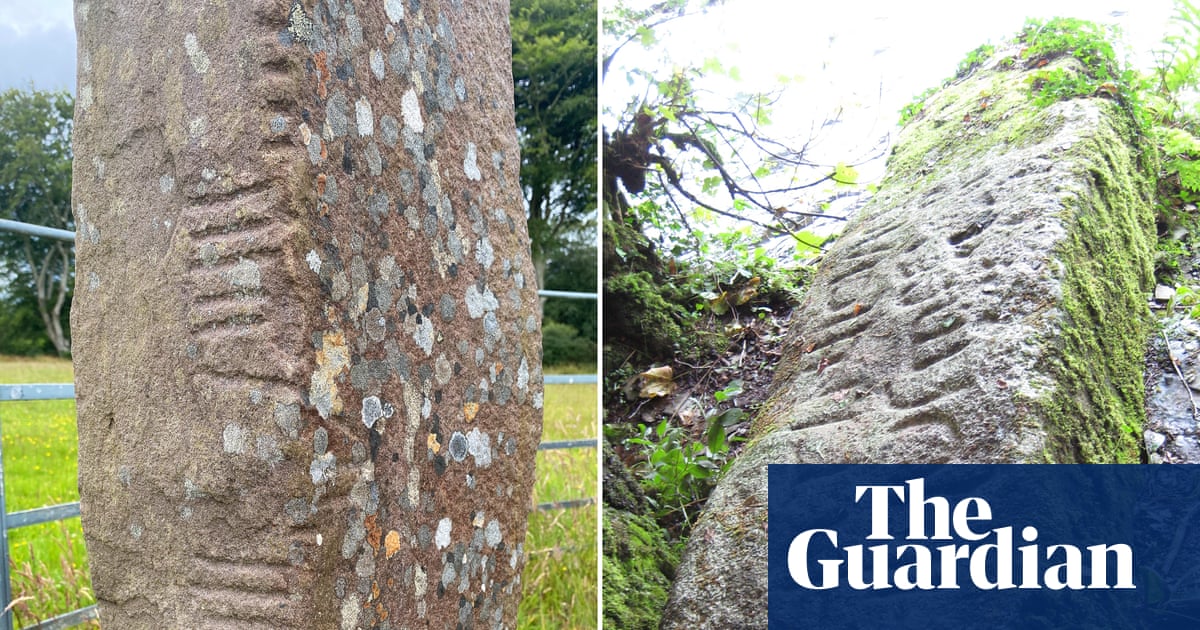
Another source is stone inscriptions such as the discovery of Cornwall and Ireland to use the Ogham alphabet, a system of straight lines designed to be made of stone, metal, wood or wood or wood or wood or wood or wood.
“In North-West Europe, at the beginning, we don’t have a very old history. If you have Agitala, it’s the Phoenicians and the Phoenicians and the Elemerscans in writing everything.
“When you get to the north of France and Britain you don’t have much at all. We have names and names and you can start trying stories from there.”
The system produces online and printed dictionaries.